From a Spanish fort to the most famous balcony in Latin America
The Casa Rosada stands on the spot where Buenos Aires has been governed since the 16th century: first a Spanish fort on the river, then a customs house, then a post office and a government house that an Italian architect joined into one palace.
Painted pink since Sarmiento's time, it has watched over every turning point of Argentine history on Plaza de Mayo.
Juan de Garay refounds the city and reserves the riverside plot, where the Casa Rosada now stands, for a fort.
A fort is built and rebuilt on the site, the seat of colonial governors and later viceroys of the Río de la Plata.
On the square in front, then the Plaza de la Victoria, the May Revolution starts Argentina's path to independence.
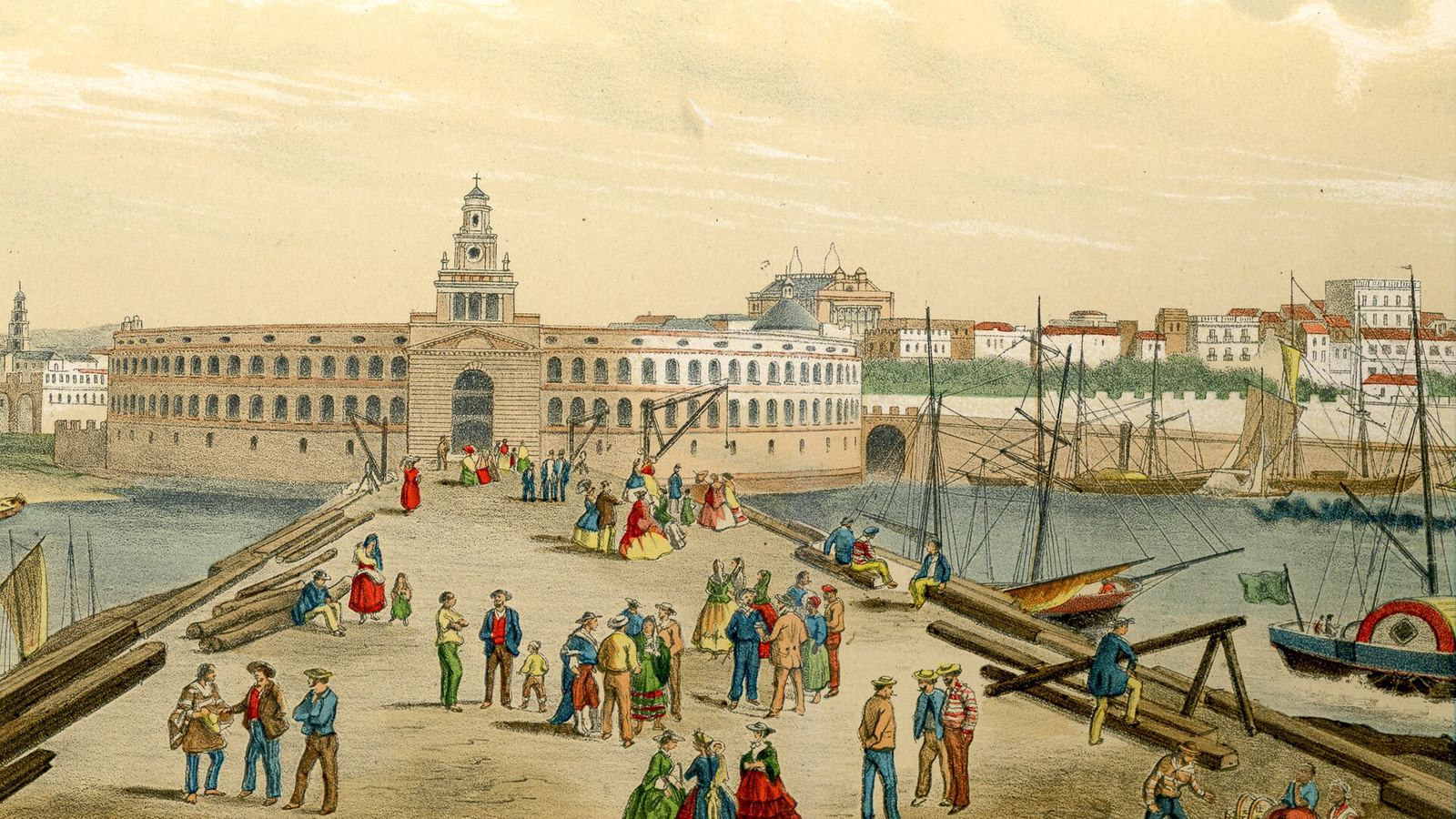
Much of the old fort is demolished and the semicircular Taylor customs house is built behind it. Its vaults now hold the museum.
President Sarmiento has the government house painted pink, and work begins on a central post office on the site.
The Italian architect Francesco Tamburini joins the two buildings with a monumental arch. The palace is completed in 1898 under President Roca.
The Casa Rosada is declared a National Historic Monument.
Juan and Eva Perón make the balcony their stage, speaking to vast crowds on Plaza de Mayo.
The Madres de Plaza de Mayo begin their Thursday marches for the disappeared of the military dictatorship.
The World Cup winners celebrate on the balcony in 1986; ten years later Madonna sings from it while filming Evita.
Juan Domingo Perón and Eva Perón turned the balcony into a political stage, speaking to the descamisados who filled Plaza de Mayo. Evita's speeches from here are part of Argentine memory.
She is buried in the Duarte family tomb at Recoleta Cemetery.
In 1986 Diego Maradona and the World Cup winners showed the trophy to the crowds from the balcony. In 1996 Madonna sang "Don't Cry for Me Argentina" from it, filming Alan Parker's Evita.
The best-known explanation goes back to President Domingo Faustino Sarmiento in the 1870s. After decades of civil war between the Federalists, whose colour was red, and the Unitarians, whose colour was white, a blend of the two would signal national unity.
A more practical story says the pink came from whitewash mixed with cattle blood, a common technique of the time. Either way, the colour stuck, and today the palace is repainted in its distinctive shade.
The top-rated walking tour tells the story from Plaza de Mayo and includes the museum. See the tour →
The Museo Casa Rosada shows the remains of the colonial fort and the Taylor customs house.
Free museum Wednesday to Sunday, and Plaza de Mayo any time.